
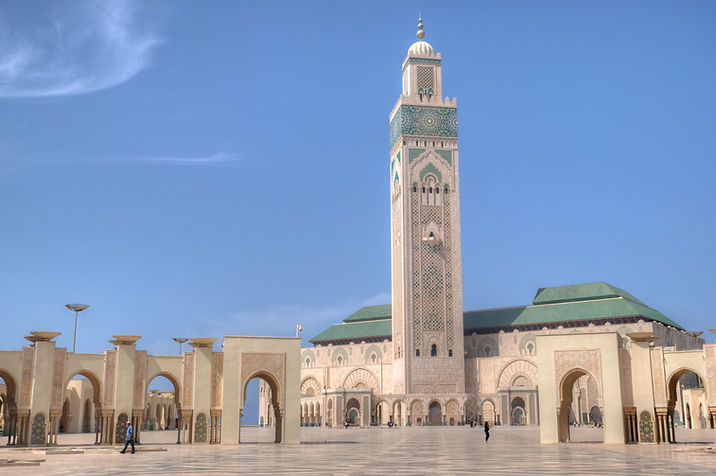
Casablanca, the largest city in Morocco, is a bustling metropolis located on the Atlantic coast. Known for its stunning architecture, vibrant culture, and modern urban lifestyle, Casablanca offers a unique blend of tradition and modernity.
As the economic and cultural hub of Morocco, Casablanca is a gateway to the country's diverse landscapes and cultural treasures. With its cosmopolitan atmosphere and historical charm, Casablanca promises an unforgettable experience for every traveller.
A Brief History
Casablanca’s origins trace back to the ancient Berber settlement of Anfa, which flourished as a trading port. By the 15th century, Anfa had become a base for pirates, leading the Portuguese to destroy it in 1468. They rebuilt the town in 1515, naming it Casa Branca, meaning “White House”.
In the 18th century, Sultan Mohammed ben Abdallah reconstructed the city after an earthquake, renaming it ad-Dār al-Bayḍāʾ, the Arabic translation of Casablanca. Its strategic Atlantic location made it a hub for commerce and migration.
French forces occupied Casablanca in 1907, and under colonial administration the city was rapidly modernised with new boulevards, industrial zones, and a deep-water port. This transformation established Casablanca as Morocco’s economic capital.
During World War II, Casablanca was a key Allied base and the site of the 1943 Casablanca Conference, where Winston Churchill and Franklin D. Roosevelt planned military strategy.
Today, Casablanca is Morocco’s largest city and commercial centre, known for its modern skyline, bustling port, and landmarks such as the Hassan II Mosque, one of the largest mosques in the world.
For more, explore the History of Casablanca on Wikipedia or Morocco World News.
Casablanca, Morocco
Attractions and Activities
Hassan II Mosque
The Hassan II Mosque is Casablanca’s most iconic landmark and one of the largest mosques in the world. Built partly over the Atlantic Ocean, it features intricate Moroccan craftsmanship, a towering minaret, and guided tours that allow non-Muslim visitors to explore its interior.
Old Medina
Casablanca’s Old Medina offers a glimpse into traditional Moroccan life. Narrow alleys, bustling souks, and artisan workshops create an authentic atmosphere. It’s ideal for shopping local crafts and experiencing daily culture.
Corniche Ain Diab
The Corniche is a lively coastal promenade lined with cafés, restaurants, and clubs. Visitors can stroll along the Atlantic, enjoy seafood dining, or relax at beach resorts. It’s especially popular at sunset.
Habous Quarter
Also known as the New Medina, the Habous Quarter blends traditional Moroccan architecture with French colonial planning. It’s home to bookshops, bakeries, and handicraft stalls, making it a favourite for cultural exploration.
Royal Palace of Casablanca
The Royal Palace, located in the Habous district, is an impressive example of Moroccan architecture. While entry is restricted, visitors can admire its grand gates and surrounding gardens.
Museum of Moroccan Judaism
The Museum of Moroccan Judaism is the only Jewish museum in the Arab world. It highlights the history, traditions, and contributions of Morocco’s Jewish community through artefacts, photographs, and cultural exhibits.
Parc de la Ligue Arabe
Casablanca’s largest park, Parc de la Ligue Arabe, offers shaded paths, fountains, and gardens. It’s a peaceful retreat from the city’s bustle and a popular spot for families.
Villa des Arts
The Villa des Arts is a cultural centre showcasing contemporary Moroccan art. Exhibitions, workshops, and performances highlight the city’s creative spirit.
Culture
Arts and Architecture
Casablanca is a showcase of modern Moroccan architecture blended with French colonial design. The Hassan II Mosque stands as a masterpiece of craftsmanship, while Art Deco buildings in the city centre reflect its colonial past. The Villa des Arts hosts exhibitions of contemporary Moroccan art and cultural events.
Music and Performance
Casablanca’s music scene ranges from traditional Andalusian and Gnawa rhythms to modern jazz and electronic sounds. The city hosts festivals such as Jazzablanca and the Boulevard Festival, which highlight both local and international talent. Live music venues and cultural centres keep the city’s nightlife vibrant.
Culinary Traditions
Casablanca’s food culture blends Moroccan staples with international influences. Street markets and restaurants serve tagines, couscous, and seafood fresh from the Atlantic. The Marché Central is a popular spot for sampling local dishes, while modern cafés and fusion restaurants reflect the city’s cosmopolitan character.
Religious and Cultural Diversity
Casablanca is home to Morocco’s largest Muslim population but also preserves Jewish heritage through the Museum of Moroccan Judaism. Churches, mosques, and synagogues coexist, reflecting the city’s multicultural history and ongoing diversity.
Festivals and Events
Annual events such as the Casablanca International Film Festival and the Boulevard Festival celebrate cinema, music, and youth culture. Religious holidays like Ramadan and Eid are widely observed, shaping the rhythm of daily life and community gatherings.
Best Time to Visit
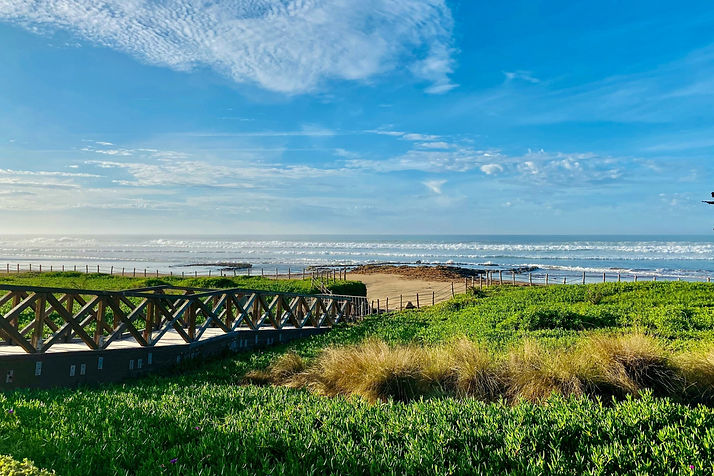
The best time to visit Casablanca is during spring (April to June) and autumn (September to October), when the weather is mild, pleasant, and ideal for exploring the city’s architecture, markets, and coastal promenades.
Spring (April to June)
Spring is one of the most comfortable seasons in Casablanca. Temperatures are moderate, averaging between 15°C and 25°C, with gentle breezes from the Atlantic. This is an excellent time for walking tours of the Old Medina, visiting the Hassan II Mosque, and enjoying outdoor cafés along the Corniche.
Summer (July to August)
Summer brings warmer weather, with highs around 28°C. While it can be muggy, the coastal location keeps conditions manageable compared to inland Moroccan cities. This is a popular time for beach activities at Ain Diab and evening strolls along the waterfront.
Autumn (September to October)
Autumn offers mild temperatures and fewer crowds. It’s perfect for cultural exploration in the Habous Quarter, attending festivals like Jazzablanca, and enjoying fresh seafood at the Marché Central.
Winter (November to February)
Winters are cooler, with average lows around 13°C. Rainfall is more frequent, but the city remains lively with indoor attractions such as the Museum of Moroccan Judaism and the Villa des Arts. This season is quieter and often more affordable for travellers.
Travel Tips
Emergency Services
In case of emergency, dial 19 for police, 15 for ambulance, and 150 for fire services. Casablanca also has private clinics and hospitals such as Clinique Badr and Hôpital Universitaire International Cheikh Khalifa offering 24-hour care.
Nearest Train Station
Casa Voyageurs is Casablanca’s main train station, connecting the city to Rabat, Marrakech, and Tangier via Morocco’s national rail network ONCF. It also links to the Al Boraq high-speed train service.
Nearest Airport
Casablanca Mohammed V International Airport (CMN) is located about 30 km south of the city centre. It is Morocco’s busiest airport, offering domestic and international flights. Transport options include ONCF trains, taxis, and shuttle buses.
Commonly Asked Questions
Q: What is the most famous landmark in Casablanca?
A: The Hassan II Mosque is Casablanca’s most iconic site, known for its oceanfront setting and towering minaret.
Q: Is Casablanca safe for tourists?
A: Yes, Casablanca is generally safe, though petty theft can occur in crowded areas. Stick to registered taxis, avoid isolated streets at night, and keep valuables secure.
Q: What languages are spoken in Casablanca?
A: Arabic and French are the main languages. English is increasingly understood in tourist areas, but learning simple phrases in Arabic or French is helpful.
Q: What is Casablanca best known for?
A: Casablanca is Morocco’s economic capital, famous for its modern skyline, Art Deco architecture, vibrant markets, and cultural diversity.
Q: How do I get around Casablanca?
A: Use red taxis for short trips, ride-hailing apps for convenience, and trains from Casa Voyageurs Station for travel to other cities. Walking is best for exploring neighbourhoods like the Old Medina and Habous Quarter.
Casablanca, with its captivating blend of history, culture, and natural beauty, offers an unforgettable travel experience. From its vibrant markets to its rich cultural heritage, there's something for every traveller. So pack your bags and get ready to explore the enchanting city of Casablanca, Morocco!
Happy travels! 🌍✈️


